
Reading the DOM without fooling yourself
What the ladder actually shows, what it cannot, and the habits that make it useful.
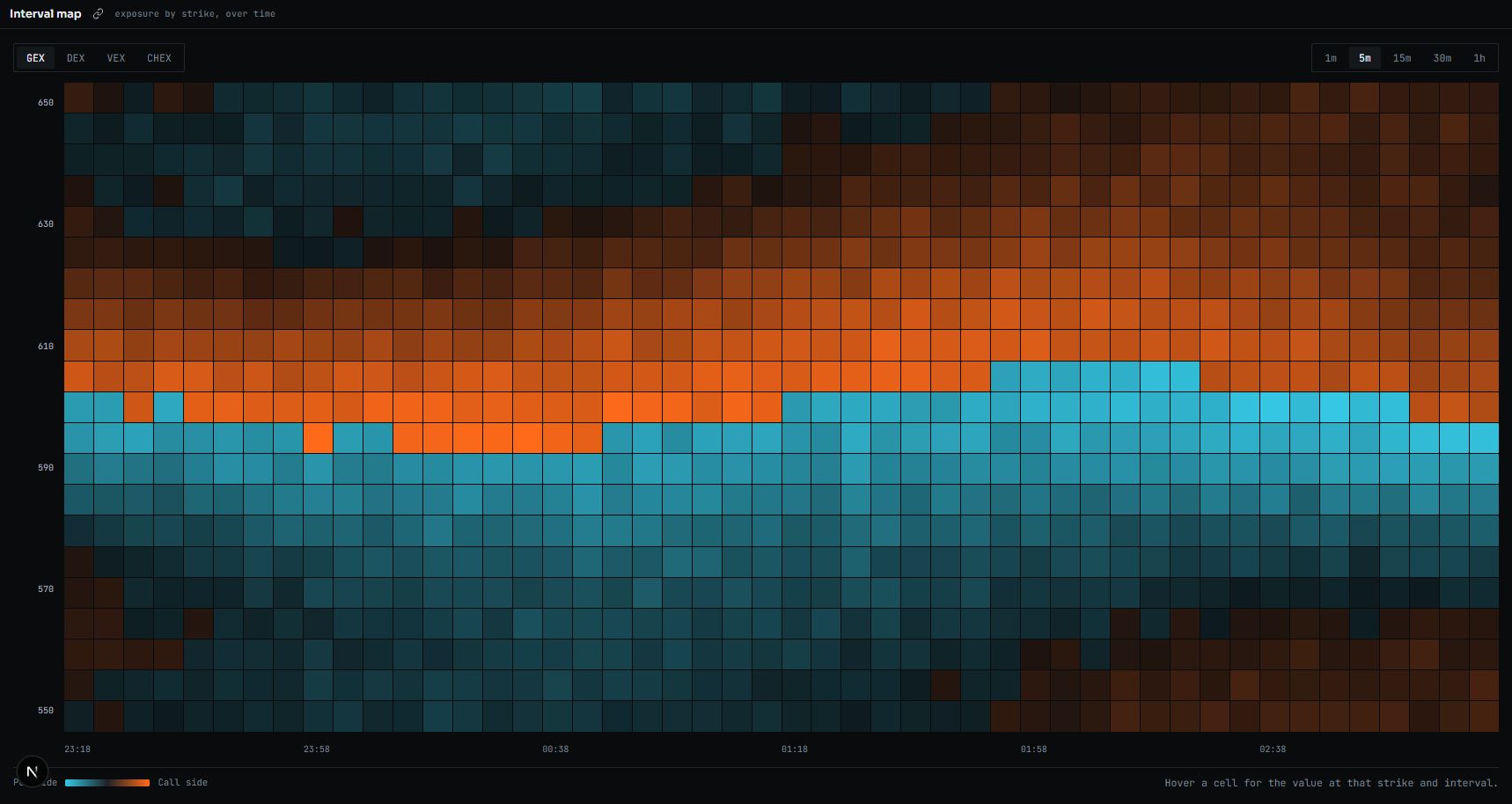
The depth-of-market ladder shows resting limit orders — how much is bid and offered at each price around the market. It is the only live picture of passive intent you get, and it is also the easiest display in trading to over-read. Both things are true, and the traders who profit from the DOM are the ones who hold them together.
What the ladder genuinely tells you
- Where liquidity is thick and thin — moves accelerate through thin books and grind through thick ones.
- How the book reacts to being hit: bids that reload after absorbing size mean something very different from bids that vanish on approach.
- The pace of the market — the ladder flickering versus crawling is information no chart carries.
What it cannot tell you
Displayed size is an offer, not a commitment: orders cancel in microseconds, real intent hides behind icebergs, and much of institutional volume never rests on the book at all. The ladder shows what participants want you to see, which is why reading it is about behaviour over time rather than a snapshot.
Three habits that separate signal from noise
Watch levels get tested, not levels sitting untouched. Ten thousand resting at a price means little; what happens when a thousand trades into it means a lot.
Track pulling and stacking. Bids being pulled as price falls toward them is the book voting against its own advertisement. Offers stacking above a rally is supply arriving.
Anchor to a map. The DOM around a dealer wall or a value edge is worth minutes of attention; the DOM in the middle of a range is mostly weather.
Sources and further reading
The research this guide leans on. Citations rather than links, so they stay verifiable after journal URLs move.
- Harris, L. (2003). Trading and Exchanges: Market Microstructure for Practitioners. Oxford University Press.
- O’Hara, M. (1995). Market Microstructure Theory. Blackwell.
- Hautsch, N. and Huang, R. (2012). The market impact of a limit order. Journal of Economic Dynamics and Control 36(4).